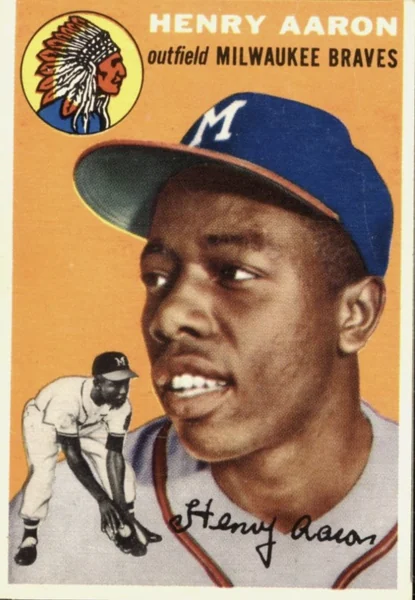
Henry Aaron was the quiet master of the long game. Not the loudest star of his golden-age generation, not the most theatrical — just relentlessly, almost impossibly good for longer than anyone thought possible. He never hit fifty home runs in a season. He simply hit thirty or forty of them, year after year after year, for two decades, with a consistency so steady it became its own kind of wonder. Pitchers knew exactly what was coming and still couldn't stop it. And then one spring evening in 1974, that beautiful, unhurried swing carried him past the most hallowed record in American sports — and the whole country leaned in to watch.
The numbers remain staggering. 755 home runs, a mark that stood for more than three decades. More runs batted in than anyone in the history of the game. More total bases than anyone, ever — a record that speaks to the sheer, accumulated volume of his greatness. Twenty-five All-Star selections across an astonishing span. He was, by the measure of sustained production, perhaps the most productive offensive player baseball has ever known — and he did it without ever seeming to strain, those famously quick wrists snapping through the zone so smoothly that the hardest thing in sports looked, in his hands, like the most natural motion in the world.
April 8, 1974: number 715 sails over the wall, and a man rounds the bases into immortality.
That night in Atlanta was pure release. When the ball cleared the wall in left-center, the stadium erupted, two grinning college kids hopped the fence to jog alongside him between second and third, and his mother met him at home plate with an embrace the whole country could feel. Aaron had carried more pressure toward that swing than any ballplayer should — he faced ugly resistance on his way to passing Ruth's record, and met all of it with a quiet dignity that only deepened the nation's admiration — and now, at last, it gave way to joy. He didn't just break the record. He turned the moment into one of the great celebrations in the history of American sport.
That is what gives his cardboard its weight. An Aaron card holds two decades of the steadiest brilliance the game has seen — the sweetest swing of his era, and the man who made consistency itself into something monumental. His rookie marks the very start of the climb: the first cardboard of a player who would out-homer everyone who ever lived, and do it without ever seeming to strain.
You don't measure Aaron by one dazzling summer. You measure him by the long haul — twenty-three years of it, more home runs than anyone before him, a swing so pure it made history look like an easy afternoon.