The Radar
One board for every card you are chasing — at any auction house, any marketplace — sorted by what closes first.
A serious chase runs across half a dozen houses — different calendars, different logins, different ideas of when a thing closes. Missing one is the ordinary outcome, not the unlucky one.
Free, no account, nothing sent to us — it is saved in this browser only.
Your board
Nothing on your board yet. Below is an example — pick a card from the 39 we track, or paste a link from any house, and yours replaces it.

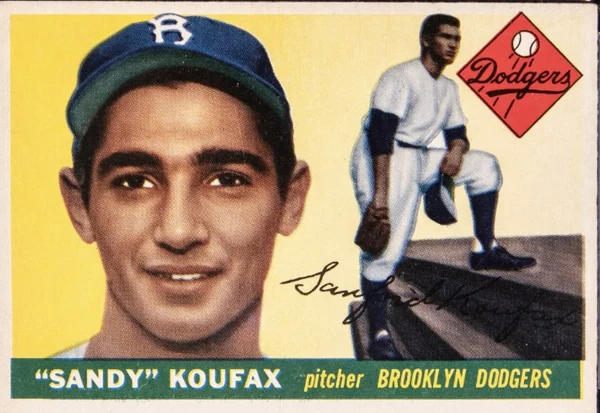

It is a convenience, not a system of record, and it does not notify you of anything. Every closing time here is one you entered, or one a house published when we last looked. Houses reschedule, extend and occasionally close early, and a sale with extended bidding does not end when the catalog says it does.
Before you act on anything, confirm it on the house’s own page. That page is the only authority on when a lot closes and what it is asking. We cannot be responsible for a lot you miss.
What we track
Press any card to put it on your board with every grade it is currently asking at. The 25 marked in gold are the Heirloom 25.
The houses — deadlines and cadence
Consignment deadlines, sale rhythms, and what each side of the transaction costs. Useful in both directions: it is when you need to be watching, and when you would need to have consigned. Consignor terms are usually agreed privately rather than posted — ordinary practice at auction, and frequently to the seller’s advantage — so where a rate is not published we say so rather than guess at it.
A buyer’s premium is only half the math. The other half is what the consignor pays, and the two move together — Fanatics Collect charges buyers 20% at auction and the seller nothing, then inverts it on Buy Now, where the buyer pays nothing and the seller pays 6%. The cost moves across the table; it does not vanish. A premium is also a price for real work: cataloging, photography, authentication, cash advances, and the reach that puts a card in front of the right bidder. Compare the total, and judge it against what the house does for it.
















 Open the directory — all 17 houses, their fees, next sales and deadlines →
All 17 houses deadlines, cadence, and what each side pays
Published terms as of 2026-08-22. Deadlines are annual and houses revise them — confirm with the house before consigning. Not one of these houses publishes a seller’s commission rate; that is why the column is absent rather than empty.
About the houses named here Independent and not affiliated with any of them — except eBay, who pay us a commission. Full notice →
About the houses named here
The marks are used to identify, not to endorse. The Heirloom Index is independent. Each auction house and marketplace shown on this page is named, and its logo displayed, solely to identify that business on a factual calendar of published terms. We are not affiliated with, sponsored by, endorsed by, or acting as agent for any of them, and none has any involvement in, or influence over, what appears here. All names, logos and trademarks remain the property of their respective owners, who do not sponsor or endorse this site. If you are a rights holder and would prefer your mark shown differently or not at all, write to support@theheirloomindex.com and we will act promptly.
Where money is involved, here is exactly where. We are an eBay Partner: if you follow eBay links from this page and go on to buy, we may earn a small commission at no additional cost to you. Those links are marked as such in the page itself. The other sixteen venues on this page pay us nothing, and no venue’s inclusion, ranking or position here has ever been influenced by whether it does. Separately, five houses — Heritage Auctions, Huggins & Scott, Memory Lane, Robert Edward Auctions, and Wheatland Auction Services — have given written permission for us to publish their realized results elsewhere on this site. That is a courtesy extended to us, not a commercial arrangement, and no money passes in either direction.
This is a reference, not advice. Everything here is descriptive and historical: published house terms, and asking prices observed in live listings. Asking prices are what sellers want, not what cards sell for, and the two differ. Nothing on this page is a valuation, an appraisal, a forecast, an offer, or investment advice, and no figure here is a recommendation to buy, sell, consign or hold anything. Terms change without notice — confirm anything that matters directly with the house before you act on it.
Why this exists

I set out to build the best collection I could. Not the biggest — the best.
What I found, after years of looking, is that the activity in this hobby is not spread evenly across thousands of names. It gathers around a surprisingly small circle: thirty-nine athletes, and inside them a shorter list of cards that people actually keep. Drawing that circle took longer than you would think, and it turned out to be the most useful thing I learned.
Watching them is the tedious part: a dozen cards means a dozen sites, in catalogs that open and close without announcing themselves.
So we built the thing I wanted and could not find: one board for those cards, wherever they are — which house, which grade, what it is asking, when it closes. Not what anything is worth. What is actually in front of you this morning.
It is built for the person trying to assemble something that outlasts them.
We can only read a venue’s inventory where that venue publishes it, which is why the ladder above covers what it covers. Your own board has no such limit — you supply the link, so any auction house and any marketplace sit on one board together, sorted by what closes first.