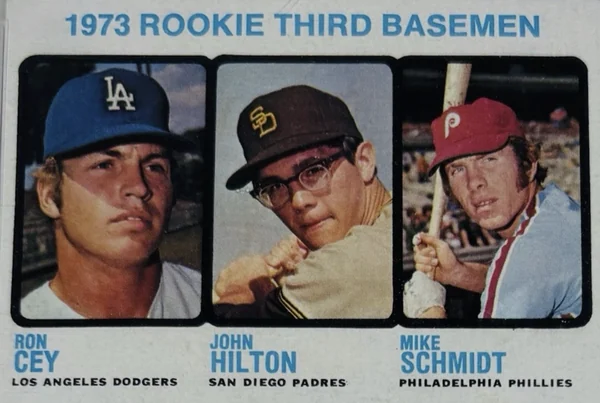
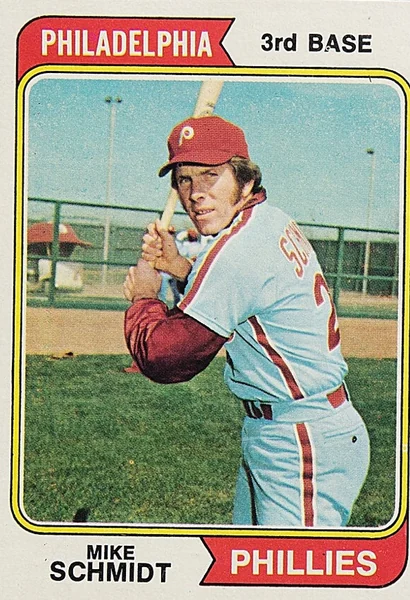
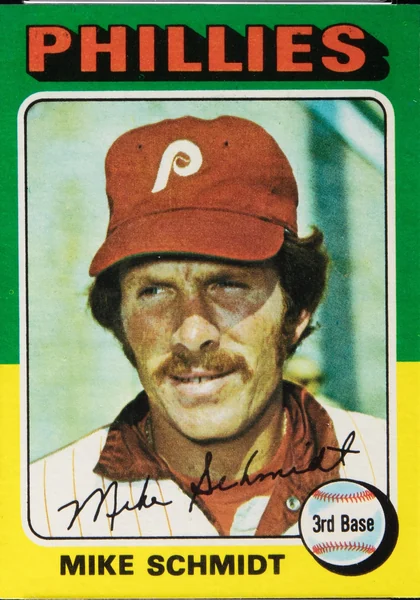
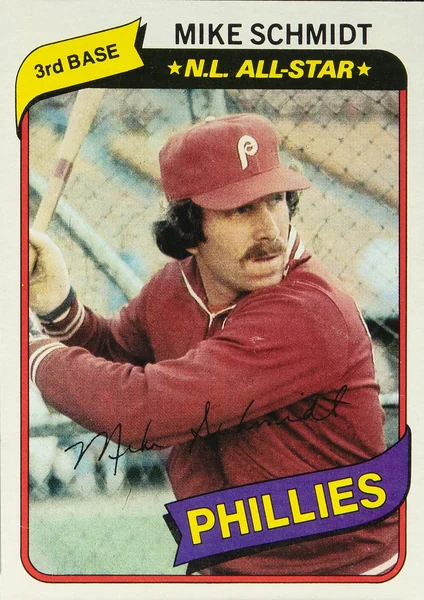
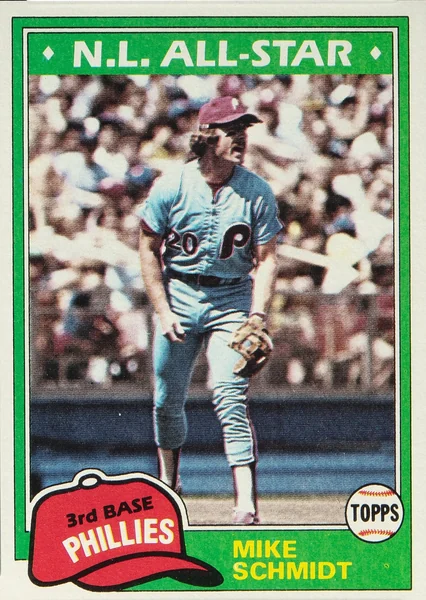
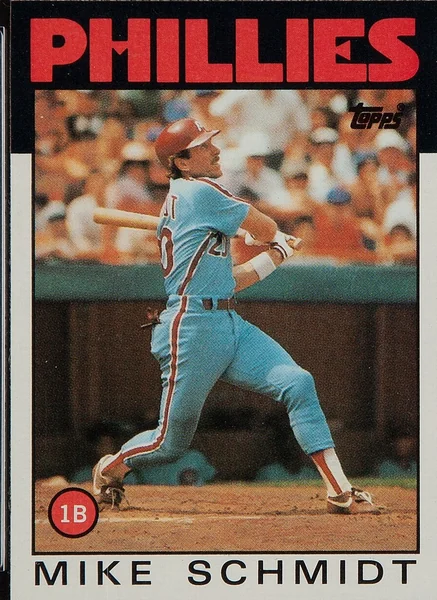
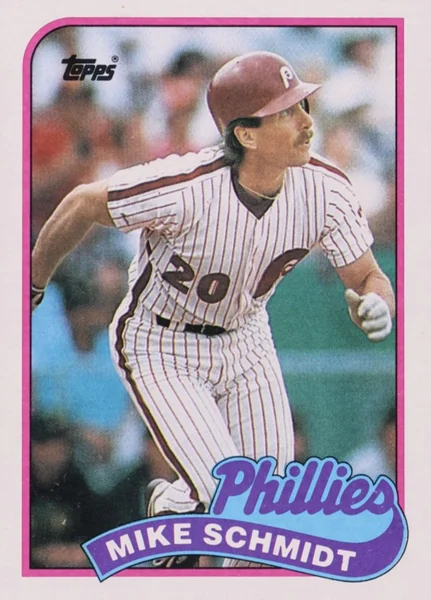
Mike Schmidt’s rookie card has three third basemen on it: 1973 Topps #615, shared with Ron Cey and John Hilton.
The card lies on its side under 1973 ROOKIE THIRD BASEMEN in blue. Three head-and-shoulders photographs sit side by side: Cey in a Dodgers cap, Hilton in a Padres cap and glasses, and Schmidt on the right in a Phillies cap, a bat on his shoulder. Each name and team runs beneath. The card calls the Padre John; he played as Dave, his middle name. The back carries the three biographies.
Three rookie third basemen. The one on the right hit 548 home runs.
The 1973 set had 660 cards in five series, the last year Topps sold its baseball cards that way. Number 615 is in the fifth, #529 to #660, the high numbers, printed in smaller quantities and usually released later in the year. Rich Gossage, Bob Boone, Dwight Evans and Garry Maddox also have rookie cards in the set, and O-Pee-Chee printed a Canadian #615 with French text on the back.
Schmidt was from Dayton, a second-round pick in 1971, taken one pick after George Brett. He made his debut in September 1972. His rookie season was hard: he missed the first ten games with a dislocated shoulder and hit .196, with 18 home runs and 136 strikeouts in 367 at-bats.
He played eighteen seasons, all with the Phillies, and hit 548 home runs. He won ten Gold Gloves, three Most Valuable Player awards, and the 1980 World Series MVP, and was elected to the Hall of Fame in 1995 with 96.5 percent of the vote. Cey played seventeen seasons, made six All-Star teams and shared the 1981 World Series MVP. Hilton played four seasons in San Diego and went on to play in Japan.
Centering is the card’s main condition issue, and the black borders on the back show wear.