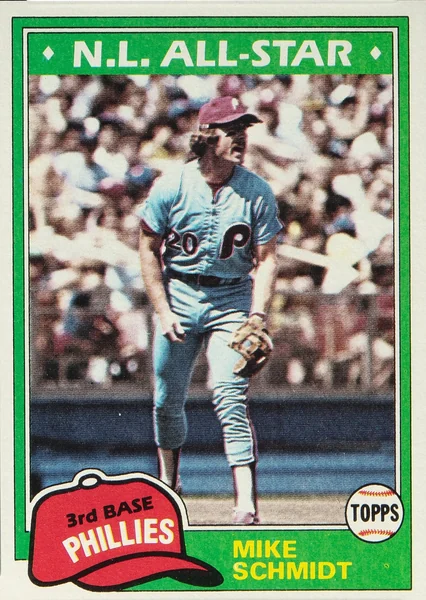
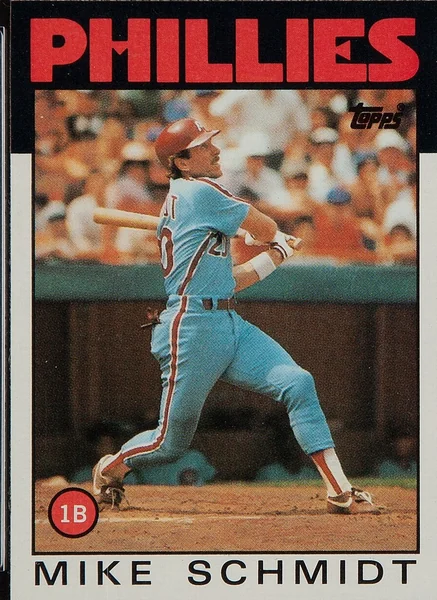
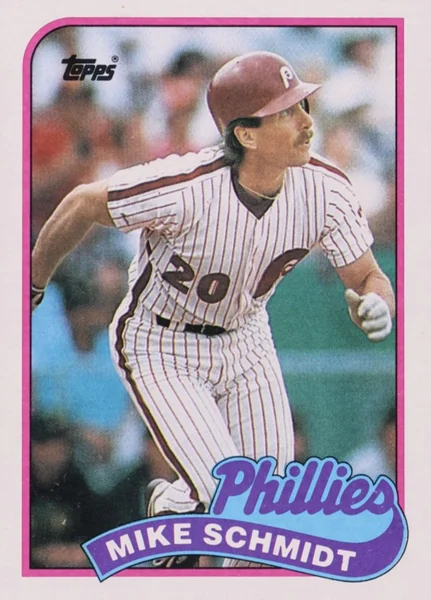
The case is not close, which is the first surprising thing about it. Mike Schmidt hit 548 home runs, won ten Gold Gloves at the hardest infield position, took three Most Valuable Player awards, and led the National League in home runs eight times, more than any other hitter in its history. He spent all eighteen seasons with one club, won a World Series in 1980 and was its Most Valuable Player, and retired holding more or less every meaningful Phillies record. Ask historians to name the finest third baseman in the game's history and the argument usually finishes before it starts.
The second surprising thing is that Philadelphia booed him. Not occasionally — routinely, for years, at home. Part of it was the strikeouts, of which there were a great many; part of it was a swing that produced long dry spells between the home runs; and part of it was simply that he was undemonstrative in a city that reads calm as indifference. He was a cerebral, self-critical, slightly withdrawn man in a ballpark that wanted somebody to shout. The day he retired, he said he was happier to be a former player than he had been as an active one, which is a sad sentence from a man who played it better than nearly anyone.
He was undemonstrative in a city that reads calm as indifference.
What the boos missed is that the glove was as remarkable as the bat. Third base is a reaction position — the ball arrives before you have finished deciding — and he played it with a first step that scouts still describe as the best they saw. Ten Gold Gloves at third is not a courtesy award; it is a decade of being demonstrably the finest defender at the position, at the same time as being one of the two or three most feared hitters in the league. Very few players have ever been the best in the sport at both halves of their job.
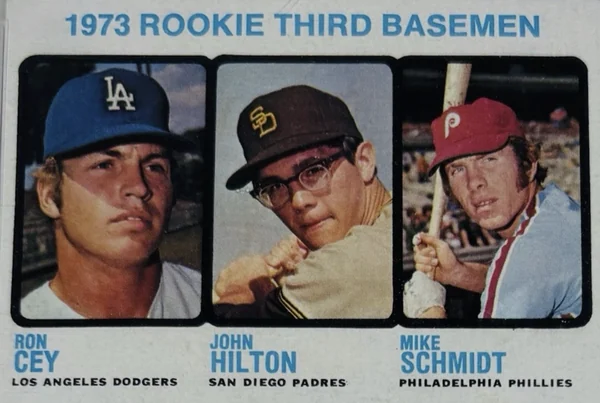
His 1973 Topps card places him on a three-player rookie card, the format Topps used for young players it had not yet decided about. It is number 615, Rookie Third Basemen, from the set's last series of high numbers, and he shares it with Ron Cey, who became the Dodgers' third baseman for a decade, and John Hilton.
He retired abruptly in mid-season in 1989, in tears at the press conference, saying he could no longer play to the standard he expected of himself. Philadelphia, characteristically, adored him from that day forward. Most names in this index were loved while they played. His is here for a career that was easier to admire than to watch, and that reads better every decade.