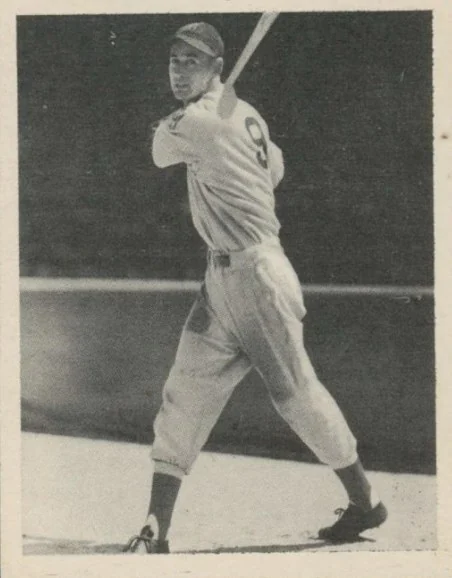
Before the .406, before the science of hitting, before two wars took five of his summers — there was a tall, restless rookie from San Diego and a small black-and-white card. The 1939 Play Ball #92 is where the greatest hitter who ever lived begins.
The card itself is almost startling in its plainness: a sepia-gray photograph, a clean white border, no team logo, no flourish — just a twenty-year-old caught before the legend. That restraint is part of its pull. There is no hint, in that quiet image, of what the man would become. It is the rare rookie card that pictures a future immortal as the rest of the world saw him for the first time: a promising kid, nothing more.
It pictures a future immortal exactly as the world first met him — a promising kid, nothing more.
The season it captures was no ordinary debut. In 1939, Williams led the entire American League in runs batted in as a rookie — a feat so rare it still has almost no company — while hitting .327 with 31 home runs. The Play Ball card is the only mainstream issue to mark that arrival, which makes it the starting point of every Williams collection: every later card is a sequel to this one.
It is also genuinely hard to own well. Pre-war cardboard was thin, the printing soft, and Play Ball's white borders punish the smallest flaw the way Williams himself punished a pitch left over the plate. Eighty-five years of handling have left high-grade survivors scarce; a clean, well-centered #92 is a quiet trophy, the kind that anchors a vintage shelf rather than fills it.
That is why it belongs here. The grails that followed are louder, but this is the first chapter — the card that exists before the records, before the cockpit, before the cap he would not tip. To hold it is to meet Ted Williams at the beginning, when all the greatness was still ahead of him.