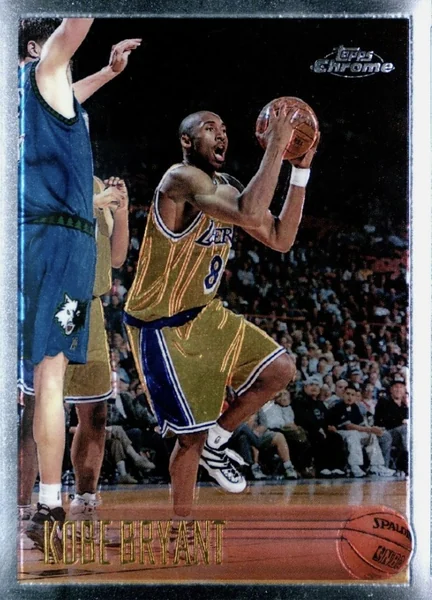
He came into the league a teenager, the number-one high-school player in the country who decided he was ready for the best basketball on earth before he could legally do almost anything else. The Hornets drafted him thirteenth and traded him west, and the Los Angeles Lakers inherited a seventeen-year-old who already believed, with total conviction, that he would become the best to ever do it. The remarkable part is not that he believed it. It is that he very nearly made the belief come true through sheer, daily, unrelenting force of will.
They called him the Air Apparent in those early years, the heir to Jordan, and he wore the comparison not as pressure but as a target. What followed was a career built less on natural gift than on a famous, almost frightening work ethic — the predawn workouts, the obsessive study, the refusal to concede a single possession or a single offseason. He won five championships. He poured in eighty-one points in a single night, a number that still sounds like a typo. He spent his entire twenty-year career in one uniform, a rarity in the modern game, and finished it by scoring sixty points in his final outing, as if the script were too perfect to be real. The mentality had a name — Mamba — and it outgrew him to become a kind of philosophy that athletes in every sport still invoke.
He turned relentlessness into an art form — and a generation learned the word for it from him.
And then, in January of 2020, he was gone, taken far too soon alongside his daughter Gianna in a loss that stopped the sporting world cold. It is impossible to speak of Kobe's place in the culture without acknowledging the grief — a global, generational mourning rarely seen for an athlete. What it revealed was how deeply he had been woven into people's lives: their childhoods, their fathers, their own competitive dreams. He had been there for the whole arc of a generation's youth, and his absence made plain just how much he had meant.
That is why a Kobe carries a weight few modern cards do. He was equal parts athlete and idea — the embodiment of giving everything, every day, to a craft. His cards are kept for the championships and the scoring titles, yes, but also for what the man came to represent, and for the love, fierce and lasting, that his name still summons. There is reverence in owning one.
You don't keep a Kobe for what he won. You keep it for what he asked of himself, and of everyone who watched.