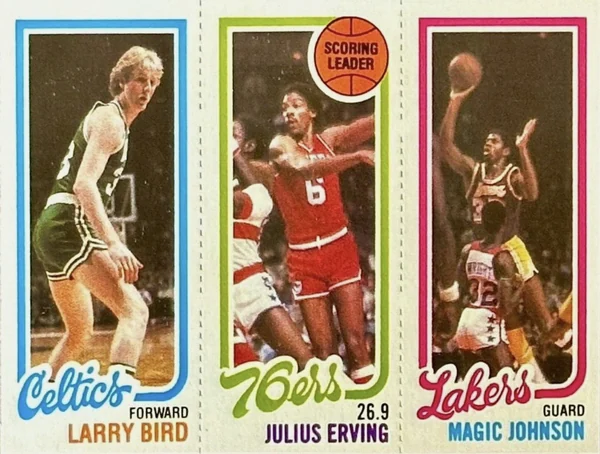
Let me tell you about the smile first, because everyone who watched him remembers the smile. Before the championships, before the no-look passes that made grown commentators laugh out loud, there was a young man from Lansing, Michigan, who played the game like it was the best thing that had ever happened to him — and somehow made you feel that way too, even from the cheap seats, even through a television set in a living room a thousand miles away. They called him Magic when he was still in high school, and the name stuck because nothing else quite captured it.
What he was had never existed before. A point guard — the position that runs the offense, the floor general, the smallest man on the court by tradition — standing six-foot-nine. He could see over everyone and around everyone. As a rookie, with his team's superstar injured, he started at center in the deciding game of the Finals and posted a line so absurd it still doesn't look real, winning the championship and its MVP award before he could legally rent a car. That was the beginning. The Lakers of the 1980s — "Showtime," they called it, the fast break as performance art — were his orchestra, and he conducted them to five titles with a flourish that made winning look like a party you wished you'd been invited to.
He played the game like it was the best thing that had ever happened to him — and made you feel it too, from a thousand miles away.
And here is the thing the numbers can never hold: Magic made the people around him better, and he made the people watching him happier. There was a generosity to how he played — the ball always moving, always finding the open man, the assist somehow more joyful to him than the basket. Three MVP awards, twelve All-Star selections, a permanent place in the argument for the greatest to ever play. But ask anyone who lived through it and they won't lead with the trophies. They'll lead with how it felt — the grin, the break, the sense that you were watching someone do exactly what he was born to do, and loving every second of it.
That is why his cardboard means what it means. A Magic Johnson card holds pure delight — the warmth of an era when one man's joy could light up a whole sport. And you cannot tell his story alone, because the moment he entered the league he found his perfect counterpart — a brilliant rival from Indiana whose game was all cerebral precision where his was all flair — and together they carried basketball into its golden age. They are bound forever, Magic and Bird. Even their rookie cards know it.
Plenty of greats earn your respect. Magic earns the smile you still wear, all these years later.