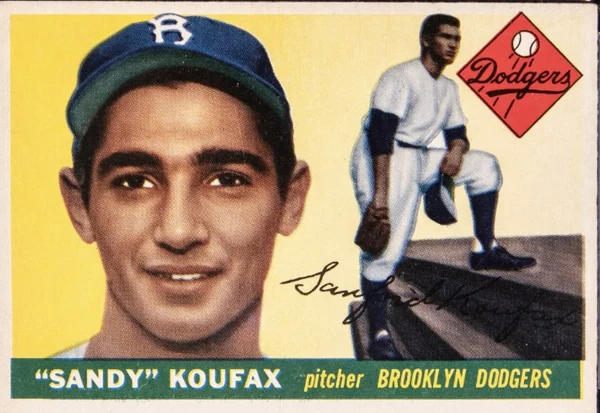
Most great careers fade. Sandy Koufax's was cut clean. For six seasons in the middle of the 1960s he was as dominant as any pitcher has ever been, and then — at thirty, at the absolute height of it — he stopped, before a ruined elbow could take the choice away from him. The brevity is part of the legend. He left nothing on the table and nothing to decline.
The peak itself reads like fiction. Three Cy Young Awards in four years — each unanimous, in an era when the honor went to just one pitcher across both leagues. Four no-hitters, the last a perfect game in 1965. Three pitching Triple Crowns, and a single-season 382 strikeouts. He turned the World Series into his personal stage, and for a stretch the best hitters alive simply had no answer for a fastball and curve everyone knew were coming.
He walked away at thirty, at the height of his powers — and left behind the finest peak the mound has ever seen.
One of his most enduring moments was a game he refused to pitch. When the opening contest of the 1965 World Series fell on Yom Kippur, Koufax — the most important Jewish athlete of his generation — declined to take the mound, observing the holiest day of his faith over the biggest stage in his sport. He won Games 5 and 7 instead. The quiet conviction of it has outlived the box scores, and made him a figure far beyond baseball.
Then it was over almost as suddenly as it began. An arthritic left elbow, pitched through on cortisone and will, forced him to retire after the 1966 season at thirty years old. He entered the Hall of Fame at thirty-six, the youngest player ever enshrined — a career measured not in length but in altitude.
A Koufax card holds a single idea: that greatness can be brief and total at once. A short, blinding peak, gone before it could dim, and worth all the more for it. There are longer careers in this index. There are very few that burned this bright.