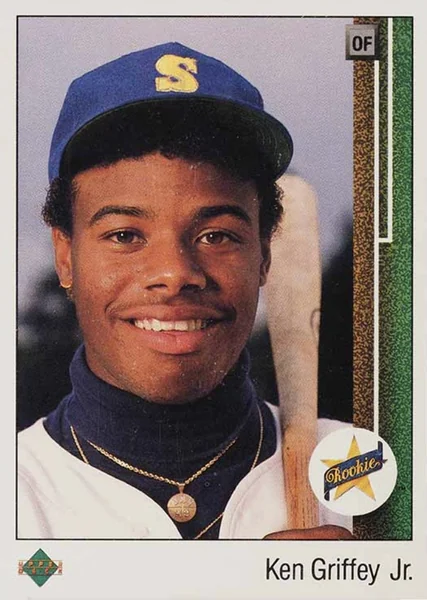
With most players you remember the numbers. With Ken Griffey Jr. you remember the way he looked doing it. The swing was the thing — a long, fluid, left-handed arc that seemed to cost him no effort at all, the bat finishing high behind his shoulder while the ball climbed into the upper deck. A generation of kids stood in front of the mirror trying to copy it. None of them could.
He arrived as royalty and exceeded it. The son of a big-league All-Star, he reached the majors at nineteen and made the game look like a thing he had been born to play, which he very nearly had. In center field he was a highlight reel — climbing walls, robbing home runs, the cap turning backward as easily as the smile came. At the plate he hit 630 home runs, won ten straight Gold Gloves, and made the All-Star team thirteen times, all of it carried off with a lightness the sport rarely sees.
He hit 630 home runs and made all of it look easy — the rarest thing an athlete can do.
His timing mattered as much as his talent. Griffey was the face of baseball in the 1990s, the player who helped pull Seattle back from the brink and keep a franchise in the city, and he did it in an era that would later be clouded by suspicion. He was never part of that cloud. As the records around him grew tainted, his stood clean — a distinction that only sharpened the affection for him as the years passed.
The verdict came in 2016, when the Hall of Fame returned its ballots: 437 of 440 voters wrote his name, the highest percentage in the institution's history at the time. It was less an election than an acclamation, the sport's way of saying out loud what everyone had felt watching him for two decades.
His eye, it turns out, did not retire with his swing. In the years since, Griffey has become a working professional photographer, credentialed on the sidelines of the World Series, the Masters, and the World Cup — the same instinct for where the moment will be, now pointed through a lens instead of from center field. It is a fitting second act for a man who always seemed to see the game a half-second before everyone else.
A Griffey card holds the joy of the game itself. He was proof that greatness and grace could be the same thing — that the best player of his generation could also be the one who looked happiest to be there. Few cards carry that much warmth.