He grew up in Commerce, Oklahoma, where his father worked the lead and zinc mines, and he came out of it with a name that sounded made for a marquee and a talent that looked the same way. Mickey Mantle could run, throw from the deepest part of center field, and hit a baseball farther from either side of the plate than men who only had to worry about one. For a country settling into its postwar prosperity and watching the Yankees under the lights of New York, he was almost too perfect: the blond, broad-shouldered kid who could do everything, on the most famous team in the world.
The numbers are large and still undersell him. Three Most Valuable Player awards. A Triple Crown in 1956, when he led the majors in batting average, home runs and runs batted in. Seven World Series titles. A home run in Washington in 1953 that the Yankees measured at 565 feet, which is where the phrase "tape-measure home run" comes from. And he did it on knees that failed him early, playing hurt for most of his career.
Seven championships, three MVPs, and a card the whole hobby is built around.
There is a reason Mantle sits at the center of the collecting world, above players who matched him on the field. He played in New York just as television carried the Yankees into living rooms across the country, which made him the face of the era for a generation of boys who would become the hobby's first serious collectors. When those boys reached middle age with money to spend, the card they chased was the one from their childhood, of the player who was their childhood.
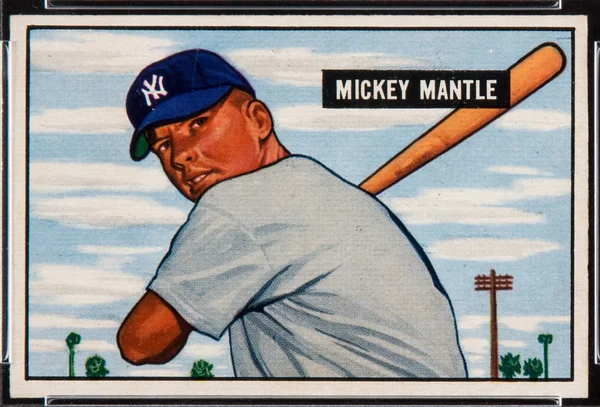
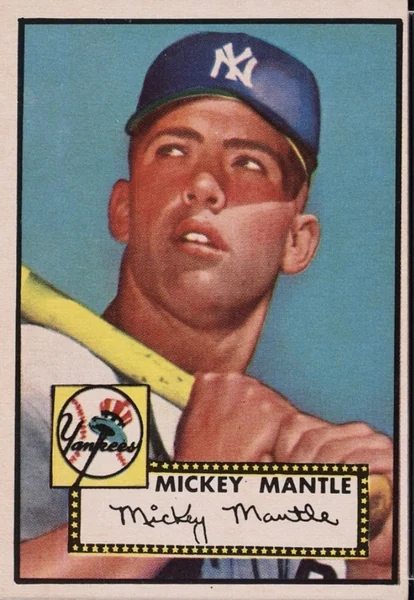
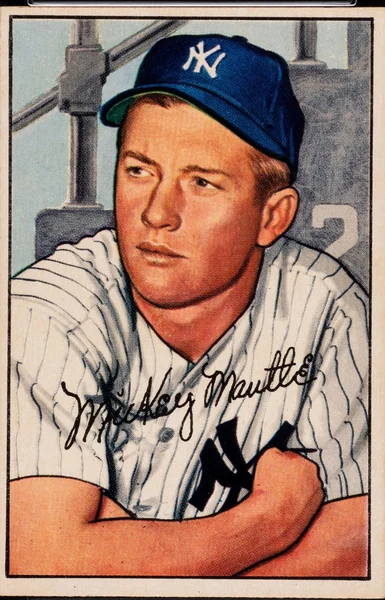
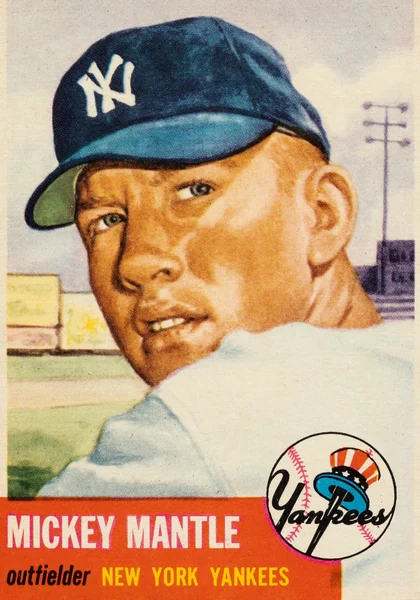
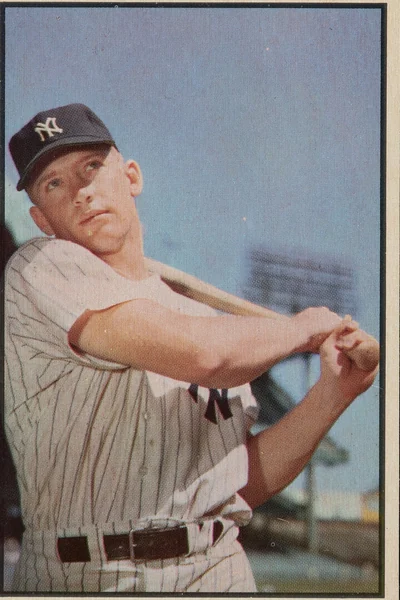
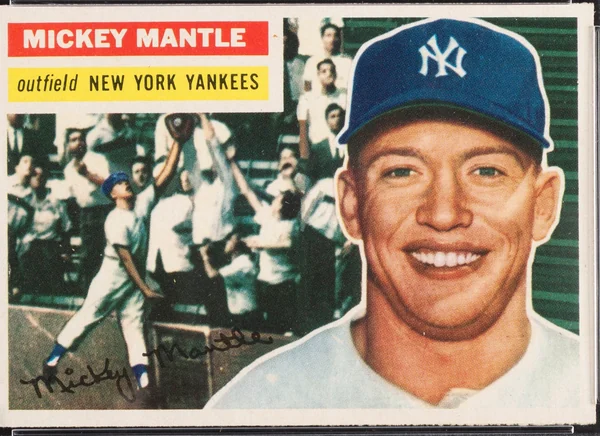
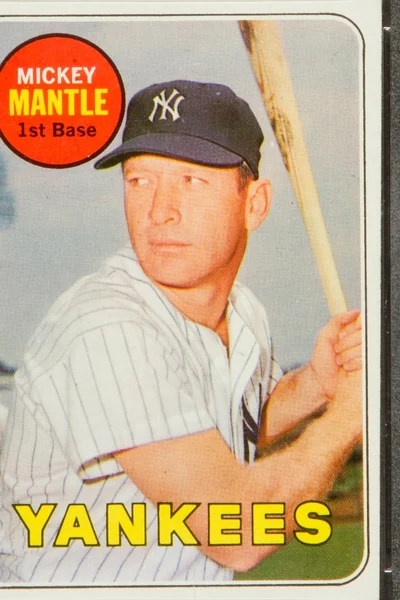
That is the story his baseball cards tell. His rookie card is the 1951 Bowman, from his first season. The 1952 Topps, number 311, became the most famous card of all. The 1956 Topps marks the Triple Crown year, and the 1969 Topps, number 500, is his last.
A Mantle card is rarely just a purchase. It is a way back to a front stoop, a transistor radio, and a summer when the Yankees were on and the whole block knew it.