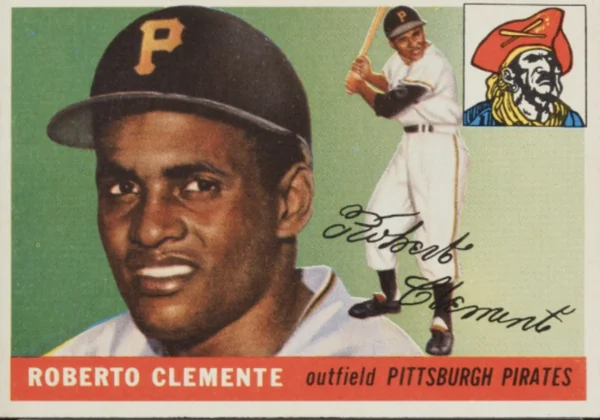
There are players you measure in numbers and players you measure in something else, and Roberto Clemente was always both. The numbers alone would have carried him to Cooperstown without argument — a career batting average of .317, a flawless and feared right-field arm, twelve Gold Gloves, two World Series titles, and a final regular-season hit that left him at exactly three thousand, a round and perfect total no one knew would be his last. He was, by wide agreement, the greatest Latin American player the game had ever seen, and he carried that distinction with a fierce and dignified pride.
He had arrived from Carolina, Puerto Rico, by way of a contract dispute that nearly kept him out of Pittsburgh altogether, and he spent his entire career with the Pirates proving a point that should not have needed proving — that a Black Latino ballplayer belonged at the very top of the American game, and would not be made small by anyone. He played with an almost regal bearing and a throwing arm that became the stuff of legend; runners simply did not test him twice. For eighteen seasons he was among the best players alive, and in the 1971 World Series, on the national stage at last, he played so brilliantly that the whole country finally saw what Pittsburgh had known for years.
The hobby reveres him for what he did with a bat. The world reveres him for what he did with his life.
But the reason Clemente's name is spoken with a reverence reserved for almost no other athlete lies in how the story ended. On the final night of 1972, he boarded a small cargo plane overloaded with relief supplies, bound for Nicaragua, where a catastrophic earthquake had left thousands in desperate need. He had organized the aid himself, and when he learned that earlier shipments were being diverted by corrupt officials before reaching the victims, he decided to accompany this one in person, believing his presence would ensure the supplies got through. The plane went down off the coast of Puerto Rico shortly after takeoff. He was thirty-eight years old. His body was never recovered.
The Hall of Fame waived its waiting period and inducted him months later — the first player ever so honored. But the truer monument is the one carried in the hearts of millions, especially across Latin America and Puerto Rico, where he remains something close to a saint: proof that an athlete's largest victories can come far from any field. A Clemente card holds a piece of that. Not merely a brilliant ballplayer, but one of the few whose character outshone even his enormous gifts.
Most names in this index are kept for how a man played. His is kept for how he lived, and for the way he chose to spend his last night on earth.