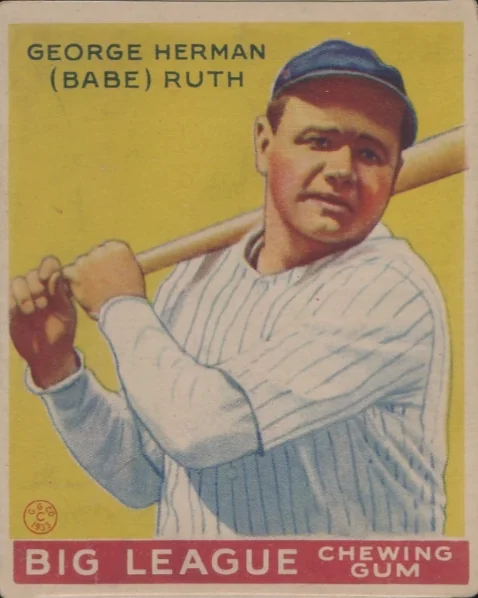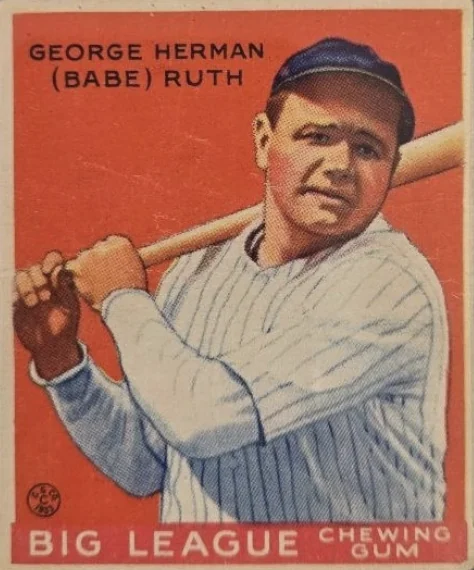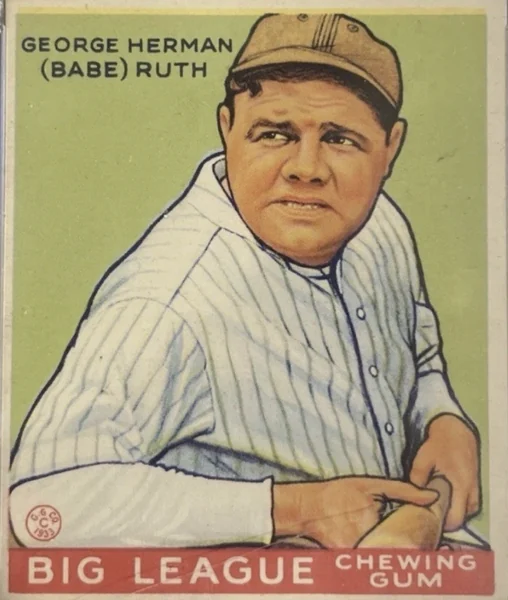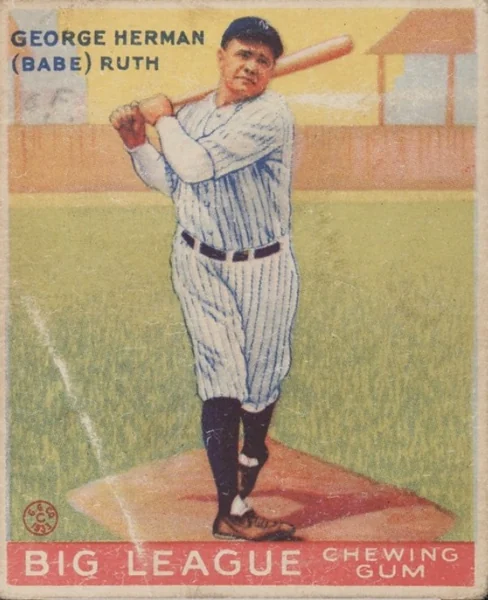
Before there was a hobby, before there was a modern sports culture at all, there was the Babe. He came along at a moment when the country did not yet know it wanted a sports hero, and proceeded to invent the role from scratch — a barrel-chested, big-living orphan from Baltimore who hit baseballs so far and so often that he forced the game to rewrite its own arithmetic. The numbers he posted were not improvements on what came before. They were a different category entirely, as if someone had been playing a smaller version of the sport until he showed up and revealed how big it could be.
He began as a pitcher — and a great one. Good enough, people forget, to have reached the Hall on his arm alone, before he ever became the most feared hitter who ever lived. Then he set the pitching aside, picked up a bat full-time, and hit more home runs in a single season than entire teams managed. He won seven pennants and a fistful of championships. He out-homered the rest of the league. For a stretch in the 1920s, the most famous person in America was not a president or a film star but a ballplayer from the Bronx, and it was not especially close.
There was the game before Ruth, and the game after Ruth — and they are not the same game.
The beginning was humbler than the myth. He was a Baltimore boy, raised hard in the rough harbor wards of the city, sent young to a Catholic reformatory where the brothers handed him a glove and quite possibly saved his life. The neighborhood of his earliest years sits in what is now the shadow of Oriole Park at Camden Yards — so close that the ground where his father once kept a saloon is said to lie within the ballpark's footprint, out toward center field. A few hundred yards from where a Baltimore boy grew up too fast, the city he came from still plays the game he remade.
What set him apart, even among the immortals, is that none of it stayed on the field. He was an appetite the size of the country itself — promising home runs to sick children and delivering them, barnstorming through small towns so that people who would never see a major-league game could say they had seen the Babe. He was larger than baseball precisely because the public decided he was, and that decision has never been revisited. Nearly a century later, in a nation that has forgotten most of the heroes of his era, everyone still knows exactly who Babe Ruth was.
That permanence is what makes the cardboard matter. A Ruth isn't really an antique — it's a starting point, the moment the game produced someone big enough that people wanted to keep the cards at all. Every grail that came after orbits him. The great ones, from the pre-war sets, are relics of the man who taught the country to fall in love with its games.
Plenty of players have been the best of their era. Ruth is the one who made being a legend the whole point.