 By
It is the question almost everyone with a box of old cards asks first, and the answer is neither yes nor no. Grading pays for itself on some cards and loses money on most. The point is to know which is which before you pay the fee.
What grading does for a seller
A graded card has been authenticated and given a condition score by an independent company, then sealed in a holder with a certificate number anyone can look up (how grading works). For a seller that does two things. It removes doubt: a buyer no longer has to trust your photographs or your eye. And it opens the card to buyers who shop only graded cards, which, for valuable cards, is most of the market.
Both are worth money. Neither is free.
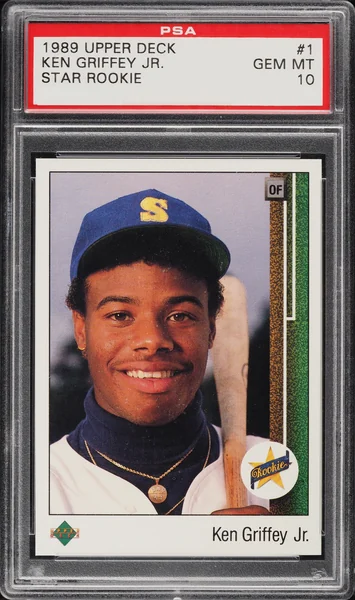
What it costs
The fee. Graders charge per card, on a scale set by the card’s value and by how quickly you want it back. A card that turns out to be worth more than its tier is moved up and billed the difference. Prices change often, so check the grader’s current schedule rather than any figure in a guide.
Shipping and insurance, both ways (how to ship a valuable card).
Time. At the less expensive service levels, cards can be away for weeks or months. If you need to sell soon, that alone may decide it.
A simple test
Ask one question of each card: would a likely grade raise what it sells for by clearly more than the cost of grading it?
To answer it, look up recent sales of the same card, raw and graded, at the grade you think it might receive. Be conservative about that grade; nearly everyone is optimistic about their own cards. If the gap between raw and a modest grade is large, grading probably makes sense. If the gap appears only at the very top grades, it is a gamble. If there is no gap, leave the card as it is.
Cards that are usually worth grading
Stars and Hall of Famers from before 1980, in nearly any condition, because buyers at that level expect them authenticated. Well-known rookie cards in strong condition. Anything you suspect might be counterfeit or altered, since the grader’s verdict settles the question either way. And any card valuable enough that a buyer would hesitate to pay full price on the strength of a photograph.
Cards that usually aren’t
Commons, the players who were never stars, from almost any year. Most cards from the late 1980s and early 1990s, which were printed in such numbers that even high grades are plentiful (why). Cards with obvious damage, unless the player is important enough that a low grade still carries value. And complete sets, which usually sell better whole.
You do not have to grade to sell well
Many sellers skip grading entirely and let the buyer decide. Auction houses and serious dealers know how to assess raw cards, and many will advise on which cards to grade, or submit them for you, as part of selling them. For a whole collection that is often the simpler path: you save the fees and the months of waiting, and the decision is made by someone who sees cards like yours every day. Every way to sell a collection compares the options.
Three rules, whatever you decide
Never try to improve a card before grading it. Cleaning, pressing, trimming and wiping are all alterations, and graders are very good at seeing them. An altered card comes back without a number.
Never crack a card out of its holder to resubmit it unless you know exactly what you are risking.
Keep the paperwork. Submission forms and invoices belong with the card, and in the record.