 By
If a collection was put together in the late 1980s or early 1990s, much of it probably dates from a stretch the hobby calls the junk wax era. The name is unkind and, for most of the cards, accurate. It is also the most common source of disappointment for families going through an old collection, so it is worth understanding why.
What happened
Through the 1980s, collecting cards grew from a children’s pastime into something adults bought for the future. Stories of older cards selling for remarkable sums persuaded a great many people that new cards would do the same. The card companies responded as any business would. Print runs rose sharply, new brands joined Topps, Fleer and Donruss (Score in 1988, Upper Deck in 1989), and each released more sets, more often.
Collectors, meanwhile, did the opposite of earlier generations. Children in the 1950s flipped their cards, clipped them to bicycle spokes, and lost them. Collectors in 1990 bought them by the case, kept them in plastic, and put them away. So the cards survived in vast numbers, and in very good condition.
The rest is supply and demand. Value in collectibles comes from scarcity, and these cards are not scarce. For most players, in most sets, there are far more surviving copies than people who want one.
Why the dates are fuzzy
There is no official start or end. Most collectors put it at roughly 1987 to 1993; some stretch it from the mid-1980s into the mid-1990s. It ended gradually, as the companies moved toward smaller print runs, premium brands, and scarce cards inserted at long odds.
The exceptions worth looking for
“Usually” is doing real work in the title. A few kinds of cards from these years still carry value, and they are worth checking for before a box is written off.
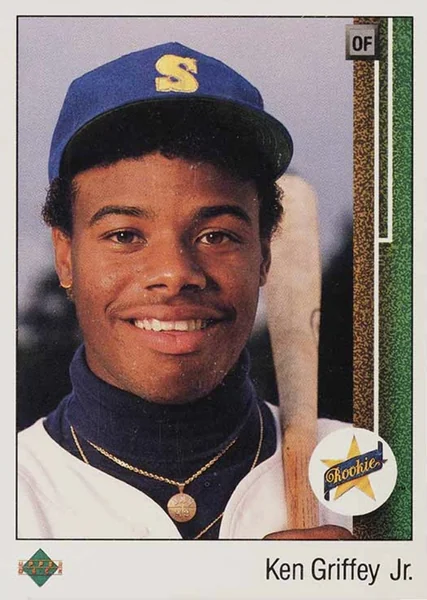
The key rookie cards, in top condition. A handful of rookies from these years are among the most recognized cards in the hobby; the 1989 Upper Deck Ken Griffey Jr., card No. 1 in Upper Deck’s first set, is the best known. Common in ordinary condition, these cards can be worth a good deal in the very highest grades, because flawless copies are a small fraction of what was printed. This is where grading matters most (should you grade?).
Errors and variations. Mistakes were sometimes caught and corrected during the print run, leaving two versions of the same card, one much scarcer. The 1990 Topps Frank Thomas printed without his name on the front, and the 1989 Fleer Billy Ripken, whose bat knob was later altered, are two of the famous ones.
Special issues. Some cards were made in small numbers for a particular purpose. Topps cards stamped with a gold Desert Shield emblem in 1991, sent to troops in the Gulf, are one example.
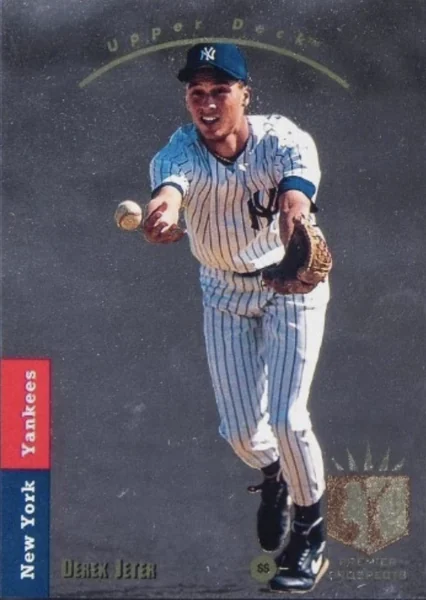
The first chase cards. By the early 1990s the companies had begun inserting scarce cards at long odds: limited inserts, the first refractors in 1993 Topps Finest, and cards like the 1993 SP Derek Jeter rookie, whose foil surface chips so easily that clean copies are hard to find.
Everything outside those years. Collections from this period often hold older cards too, traded for or handed down. Check the date on everything (how to sort a collection).
What to do with the rest
Most of it will not be worth selling card by card, and it is better to learn that early than after weeks of listing. Complete sets sometimes sell as sets. Large lots sell by the box, modestly. And a good many families decide the best use of a binder of 1990 cards is the one it was made for: a child who has never seen them. Many of today’s serious collectors started with exactly that binder.