
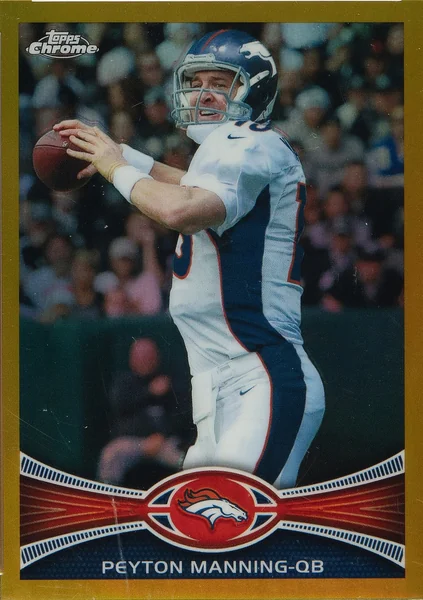
The image that survives is a man at the line of scrimmage with his hands in the air, pointing, shouting, changing the play. Peyton Manning ran the offense from the field rather than the sideline, and he ran it with a preparation that became a kind of legend in itself: the film study, the hand signals, the audibles that were sometimes decoys and sometimes not. Defenses knew exactly what he was doing and could not stop it. He threw for more yards and more touchdowns than anyone who had come before him, won five Most Valuable Player awards — a record — and became the first starting quarterback to win a Super Bowl with two different franchises.
He was the son of a quarterback, Archie, and the brother of another, and he grew up in New Orleans with the sport as the family business. Tennessee, then the first overall pick in 1998, to an Indianapolis team that had gone three and thirteen. His rookie season set a record for interceptions. His second season the Colts won thirteen games. The transformation of that franchise — from an afterthought to a team that won at least twelve games seven years running — is the plainest statement of what he was worth, and the city built a stadium around him to say so.
Defenses knew exactly what he was doing and could not stop it.
Then, in 2011, a neck injury and four operations took a whole season and very nearly the career. Indianapolis released him. He went to Denver at thirty-five with an arm that no longer threw the deep ball the way it had, and in 2013 he threw fifty-five touchdown passes and five thousand four hundred and seventy-seven yards, both records at the time, with a body that most quarterbacks would have retired. His last game was a Super Bowl win in February 2016, played almost entirely by the defense, and he left without saying he was leaving, which was in character. He announced it a month later, and cried, which was too.
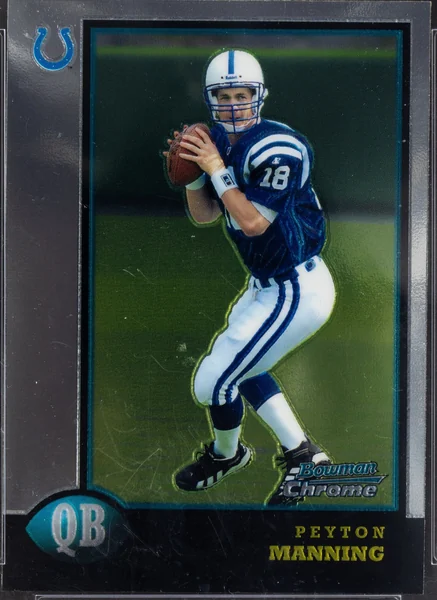
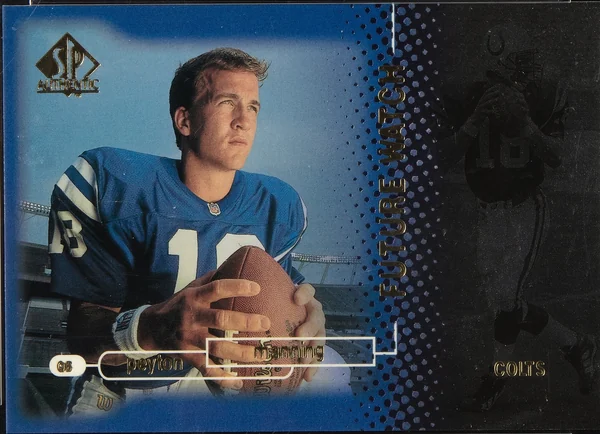
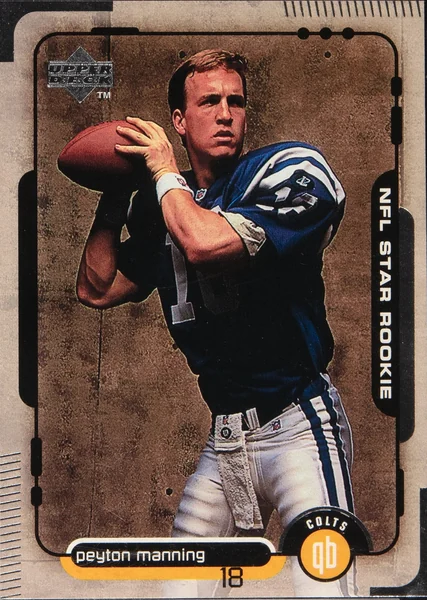
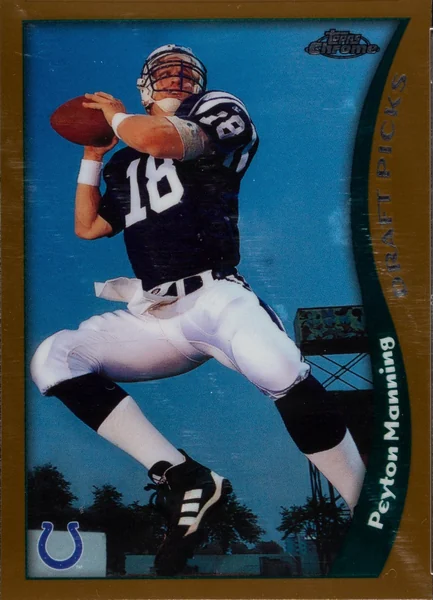
His 1998 Playoff Contenders Rookie Ticket is the card of his that collectors settled on, and it is worth saying why, because it is not the obvious choice. The Contenders Rookie Ticket carries an autograph on the card itself, signed by the player at the start of his career, and in 1998 that was still a new idea. The set made the signed rookie card the standard for football, and this one — the first-overall pick who became the most decorated passer in the game — is the card that proved the format. It is scarce, it is signed, and it was signed before anybody knew.
He was, off the field, the rare star who was funny on purpose and did not mind being the joke. On it he was something closer to a chess player who happened to be six foot five. Most quarterbacks are remembered for a throw. He is remembered for a way of thinking, which is harder to put on a highlight reel and lasts longer.