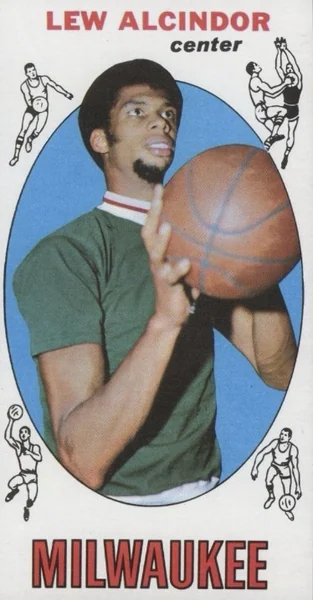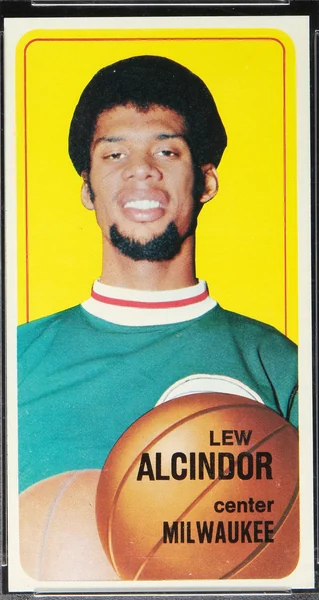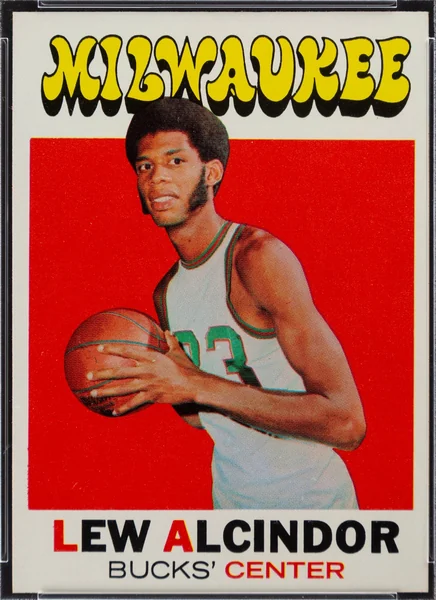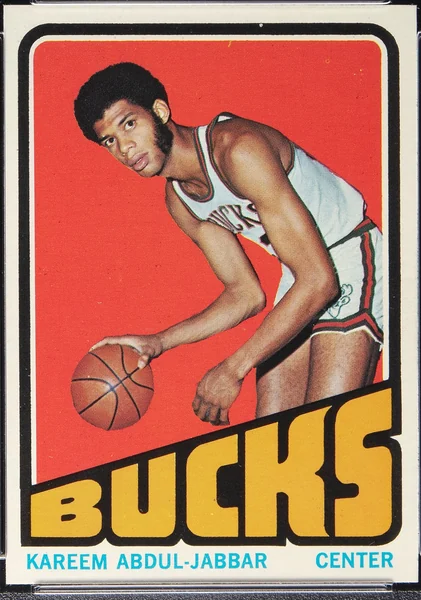
On June 16, 1975, Milwaukee traded Kareem Abdul-Jabbar, with Walt Wesley, to the Los Angeles Lakers for Junior Bridgeman, Dave Meyers, Elmore Smith and Brian Winters. He had played six seasons for the Bucks. He would play fourteen for the Lakers.
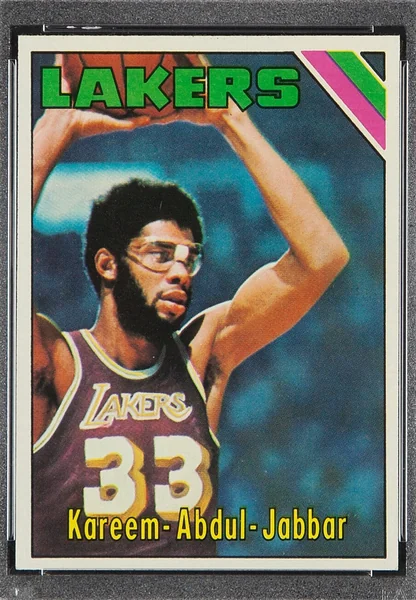
Topps's 1975-76 set was its largest basketball set to that point, 330 cards in three series, and its last with ABA players; the league played its final season that winter. Kareem is #90, and he appears again on the Lakers team card.
This is the look most people remember. LAKERS runs across the top in big green letters, two colored stripes cut across the upper corner, and he is in the Lakers' purple, number 33, arms up, wearing the goggles that became part of him, with his name in yellow script along the bottom.
The goggles, the purple, the Lakers: the look people remember begins here.
He won the Most Valuable Player award in his first season in Los Angeles, the fourth of his six.
High grades are less difficult to find than on his earlier cards, which makes this one of the more approachable cards of his prime.