The Same Card, Twice, Two Very Different Numbers
Here's the kind of thing that keeps this hobby endlessly interesting: the exact same card — Michael Jordan's 1986 Fleer rookie — sold twice in one September weekend, two days apart, for numbers so far apart you'd think they were describing two different cards completely.
First, on September 18, Heritage sold a complete run of that 1986 Fleer basketball release — every card graded a flawless 10 — for $744,200 combined. Jordan's card, sold as its own lot beside the rest of the set, accounted for $402,600 of it. There are 335 of those perfect-10 Jordans known to exist across the grading companies, and the last three that have sold on their own have all cleared $400,000. Two days later, REA sold a single copy of that same card — not a 10, an 8, a couple of notches down — for $20,910.
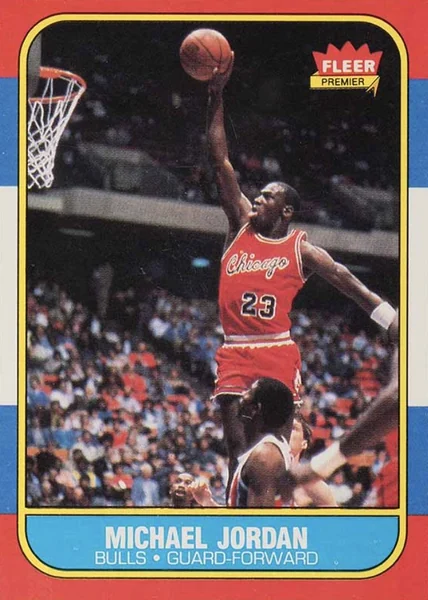
To somebody who doesn't collect, those are probably the same card in their head. To us, they're two completely different conversations, and the gap between them is basically the whole hobby in miniature — centering, corners, the fine margins that separate one grade from the next. The roster entry for this card sits right in the middle of that range, at a 9, which is exactly the kind of thing worth knowing before you ever bid on a card like this one.
The $268,400 Coincidence
That same Heritage sale handed me a genuinely fun little mystery. Two completely unrelated cards — a Rickey Henderson rookie and a Willie Mays rookie, different players, different decades — sold for the exact same price: $268,400. Not close. Identical, to the dollar.
My first thought was a typo somewhere in the paperwork. It wasn't. Both cards actually hammered — the real bid, before the house's cut — at $220,000 apiece. Heritage tacks on a 22 percent fee on top of every hammer these days, and $220,000 times 1.22 lands you exactly on $268,400. Two unrelated bidders happened to stop at the same number on the same night, and the math did the rest.
Here's the useful part, if you're the kind of collector who likes to compare what a card sold for a few years ago to what one's going for now: that fee used to be 20 percent, not 22 — Heritage raised it sometime between 2024 and last year. So a card that hasn't moved in value at all can still show a higher "sold" number today than it did a couple of years back, purely because more of the buyer's money is going to the house instead of the seller. Worth knowing before you draw a conclusion from an old number.
The Card Nobody Can Stop Grading
One more thing worth knowing if you follow this hobby at all: the 1989 Upper Deck Ken Griffey Jr. rookie just did something no card in history has ever done. It became the first sports card to pass 200,000 graded copies — 200,302, once you add up every major grading company.
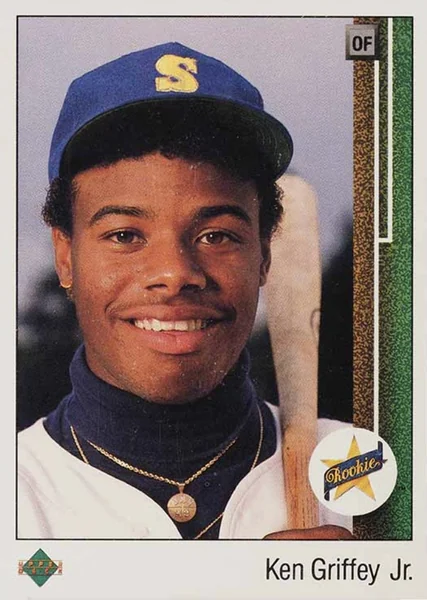
Sit with that number for a second. Two hundred thousand people have paid a company good money to inspect, label and seal this specific piece of 1989 cardboard in plastic — and even with all that traffic, only 4,375 of those copies came back a perfect 10. Ours is one of that smaller group.
That combination — a population that enormous, and a perfect grade still that scarce inside it — is one of the stranger, more interesting wrinkles in this business, and it's exactly the kind of thing you'd never notice if all you did was watch prices.
Coming Up
REA's next auction runs October 8 through 18, if you'd rather watch a sale happen than read about the results after the fact. We'll have whatever's worth reporting once it closes, same as always — and if you want to track any of our Heirloom 25 roster cards across every house at once while it's happening, that's what the Radar is built for. You can add anything else you want to keep an eye on there too.
None of it points anywhere on its own — a ladder shows what a grade brought this week, not what one will bring next, and a matching total is arithmetic, not a signal. But that's part of what keeps this fun: there's a story like this hiding behind almost every sold price, and most of them never make it past the invoice. We'll keep digging them up.
— Greg