On July 25, 1956, at Forbes Field, the Pirates were behind the Cubs in the bottom of the ninth with the bases loaded, and Roberto Clemente hit a ball that got away from everybody. He ran all the way around. It was a walk-off grand slam inside the park, and it came in his second season, the one in which he raised his average from .255 to .311 over 147 games and stopped looking like a Rule 5 gamble.
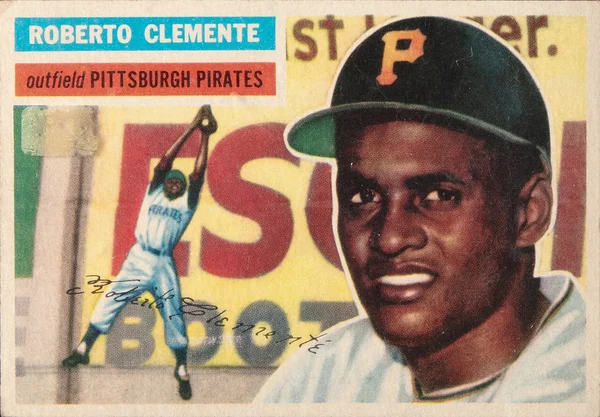
This card went into packs that summer. Topps printed 340 of them in 1956, every one laid out on its side: a head-and-shoulders portrait on one half, and behind it, filling the rest of the card, a drawn scene of the same man playing. On Clemente's the scene is a leap at the outfield wall, glove up over his head, an advertising sign painted across the fence behind him. A facsimile signature runs across the middle of the picture.
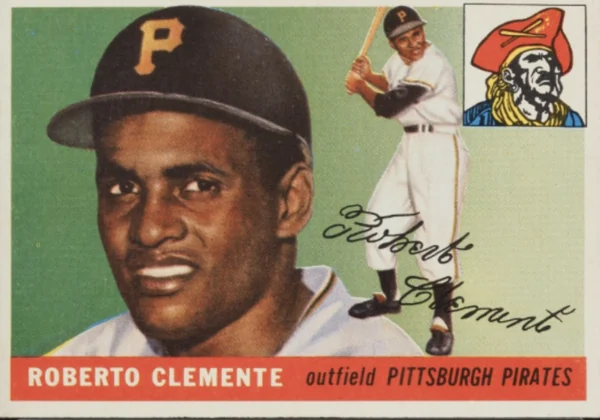
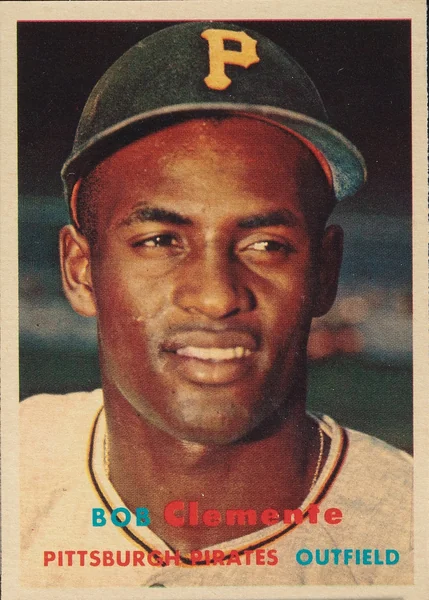
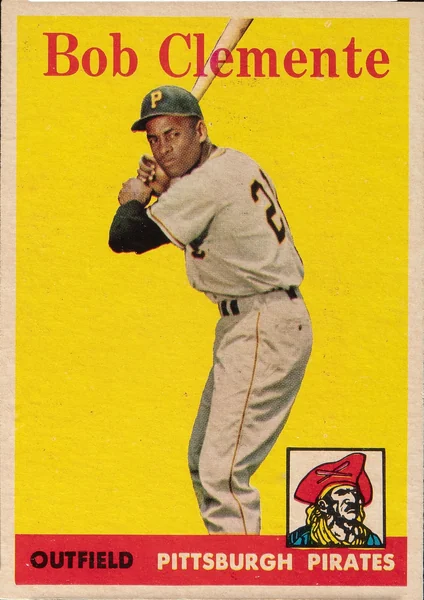
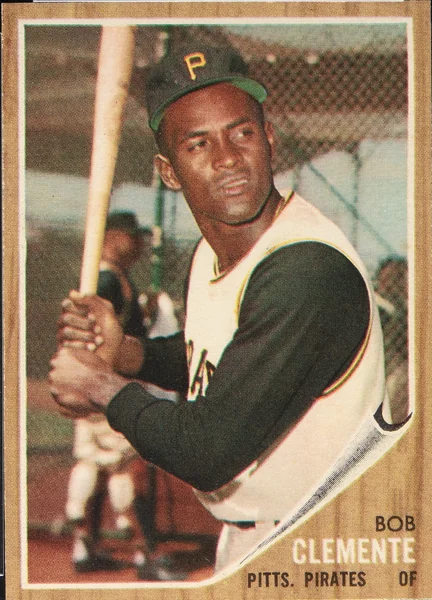
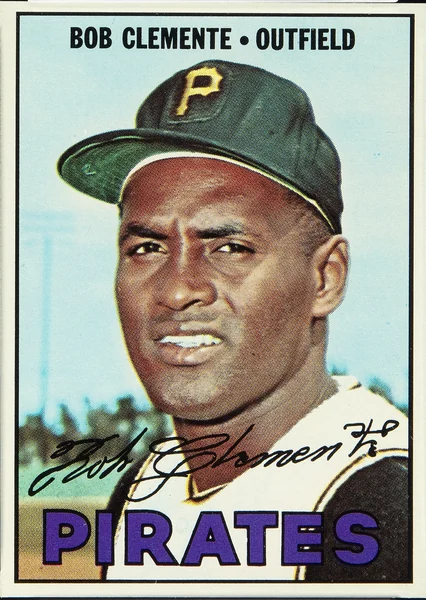
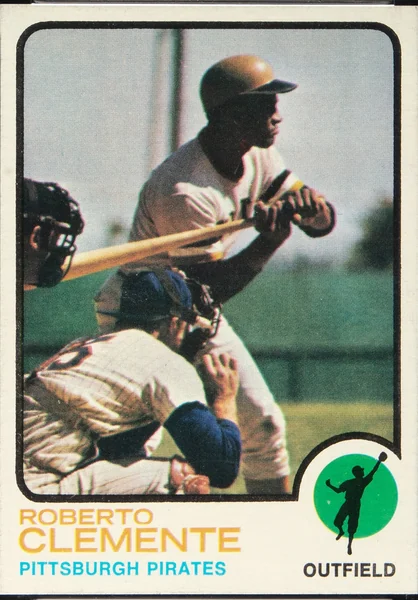
Look at the top left corner. The name bar reads ROBERTO CLEMENTE, as it had on his rookie card the year before. The next year Topps changed it to Bob, and it stayed Bob on the front of every Clemente card the company printed through 1969. He never used the name and disliked it. So the second card is also the last, for thirteen years, that calls him what he called himself.
The name bar reads ROBERTO. It would not read that way again on a Topps card until 1970.
Cards 1 through 180 of the 1956 set were printed on two kinds of cardboard, so a #33 can have a gray back or a white one. The references do not agree on which is the harder to find in the early numbers, and they agree that the difference is slight.
The wide format is generous to the artwork and unforgiving to the card. The edges were cut quickly and show it, and the centering can drift in two directions at once, which a horizontal card makes easy to see. The portrait's dark cap and the bright ground behind the leap show any surface wear before anything else does.