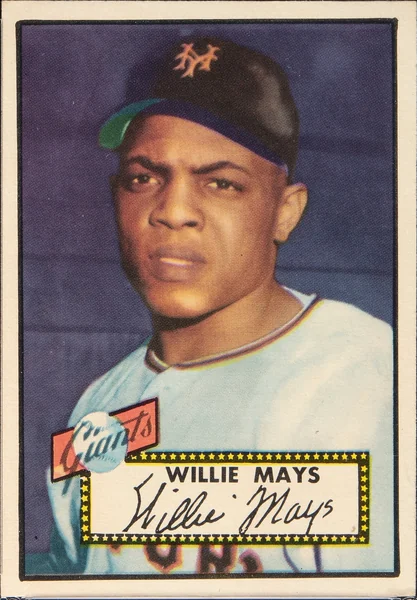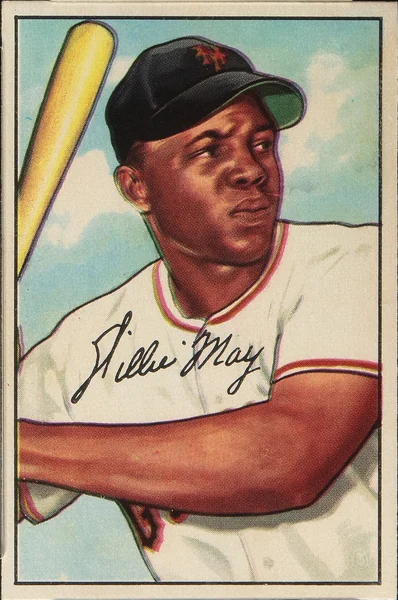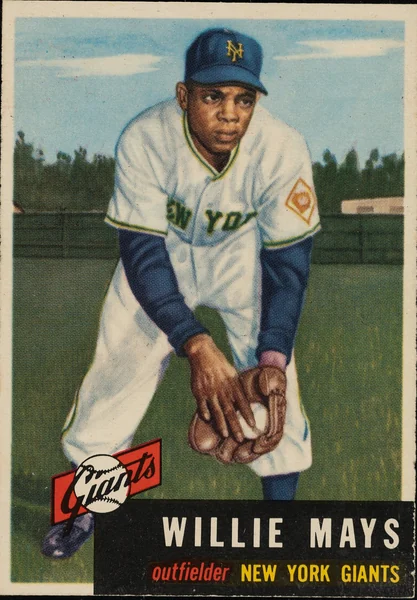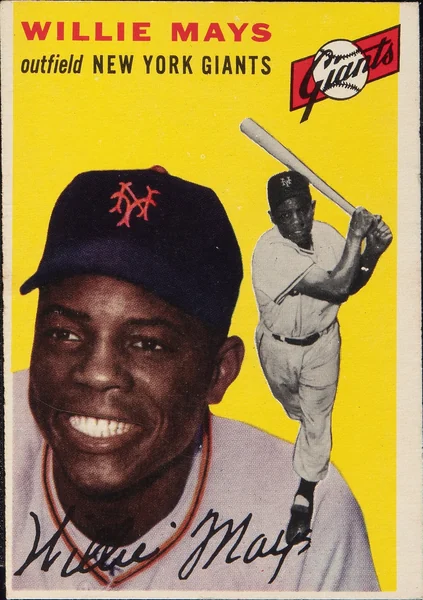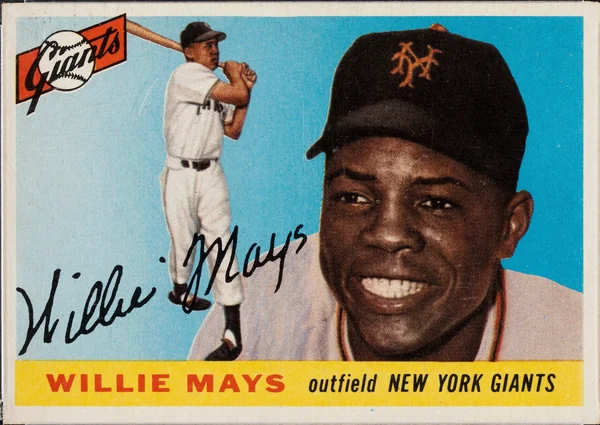
On May 11, 1972, the Giants traded Willie Mays back to New York, to the Mets, for a minor-league pitcher named Charlie Williams. Three days later, at Shea Stadium and against the Giants, he played his first game as a Met and hit the home run that won it, 5–4.
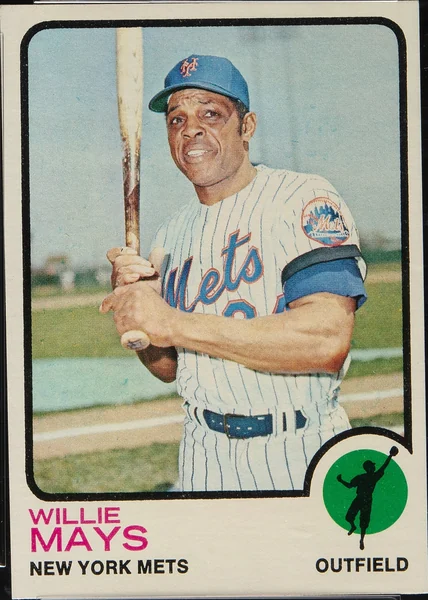
This is the card that followed. Topps made 660 cards in 1973, in five series of 132, the last year it issued its main set in series, and #305 sits in the third, printed in ordinary quantity. Mays is in Mets pinstripes, holding a bat upright and smiling, inside the set's white border. In the lower right corner a small silhouette of a fielder on a green circle marks his position, and the lines at the bottom read WILLIE MAYS, NEW YORK METS, OUTFIELD.
The number is worth noticing. His rookie card, the 1951 Bowman, is number 305 too.
His rookie card was number 305. So is his last.
He was forty-two that season. He hit .211 in 66 games, played his last regular-season game on September 9, and on September 20 announced that he would retire. Five days later Shea Stadium held Willie Mays Night, and he told the crowd, in effect, that watching the young Mets fight for themselves had told him it was time to say goodbye to America.
The Mets reached the World Series anyway, against Oakland. In the ninth inning of the second game he lost a fly ball in center field and fell, and Oakland tied the score. In the twelfth he bounced a single over Rollie Fingers's head to put the Mets ahead, and they won, 10–7. It was the last hit of his career. The 1974 set has him once more, on a World Series card from that game, but #305 is his last regular Topps card as a player.
The 1973 set is known for miscut cards in every direction, the cardboard is thin and soft, and the black border on the back chips easily.