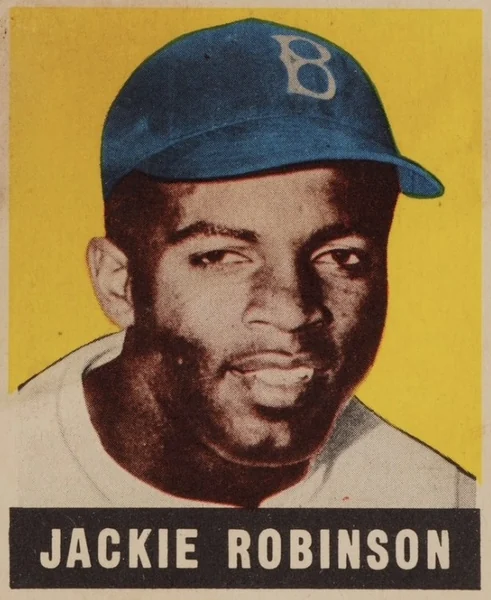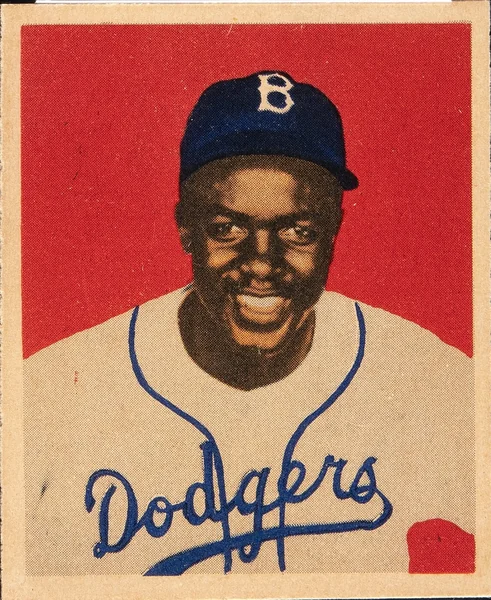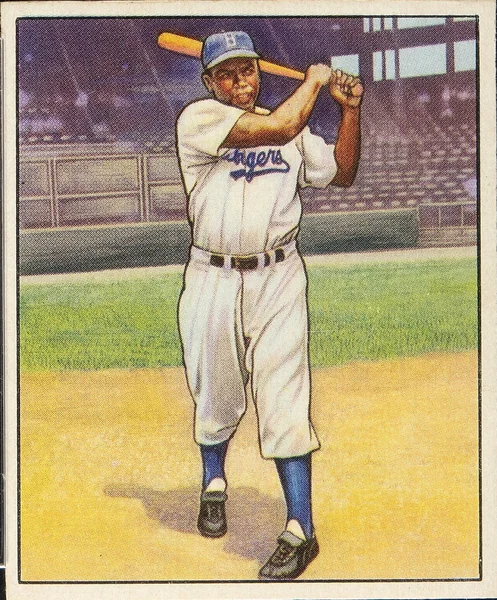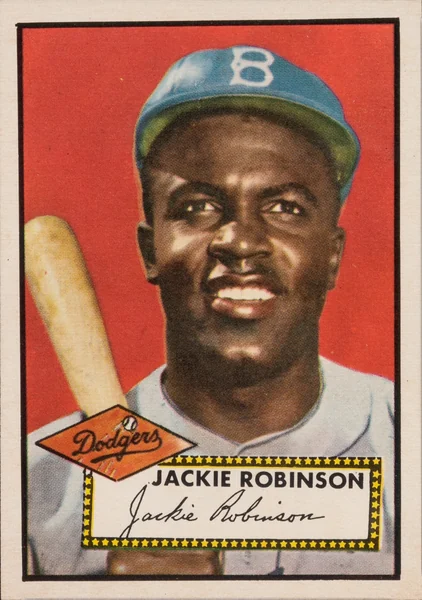
On April 15, 1947, Jackie Robinson played first base for Brooklyn at Ebbets Field, went hitless in three trips and scored a run. That was the whole of it, on paper. By the end of September the Dodgers had a pennant and he had the first Rookie of the Year award baseball ever gave out, and a New York baker had decided that the most useful face it could put in front of its customers was his.
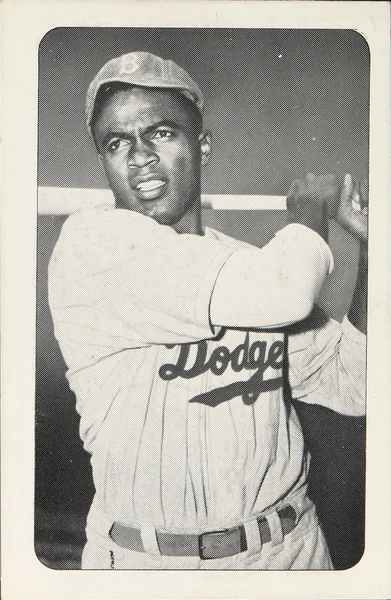
Bond Bread’s answer was a set of cards with only Robinson on them. Thirteen of them, each a black-and-white photograph with rounded corners set inside a white border, 2 1/4 by 3 1/2 inches. He bats, fields, throws, slides, leaps for a ball. One is a portrait with a short biography and a printed copy of his signature on the back. Most of the others carry an advertisement instead, asking the reader to eat the bread Jackie ate.
A New York baker decided the most useful face it could put in front of its customers was his.
The catalogs file them under 1947, and the earliest of them almost certainly is. The rest are less settled. Researchers who have gone through the photographs have found pictures that look to be from later seasons, and the better reading now is that the cards came out over several years rather than all at once. The portrait seems to have been the promotional one — handed across the counter by grocers, as the research has it, with a free slice of bread — and it survives in noticeably larger numbers than the others, which tells you something about how the rest were handed out.
This one is the batting card: the swing already finished, the bat carried back over his shoulder, the Dodgers script across a jersey worn over long white sleeves. It is not a painting and there is no color to soften anything. What you get is a man in a uniform in the middle of his work, photographed the way a newspaper would have photographed him.
That plainness is also the problem. A black-and-white photograph shows every crease, every scuff on the surface, every bit of grime from a kitchen drawer, and the stock is thin. These were not packed with any thought of keeping them. They went home with the bread and were handled by children, and most of them did not come back out. A clean one, from any of the thirteen, is scarce in a way the bigger sets of the period never are.