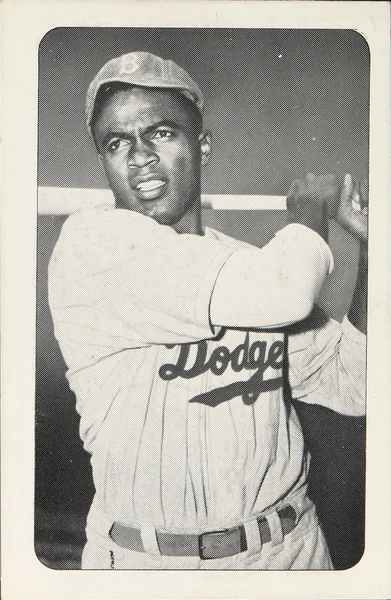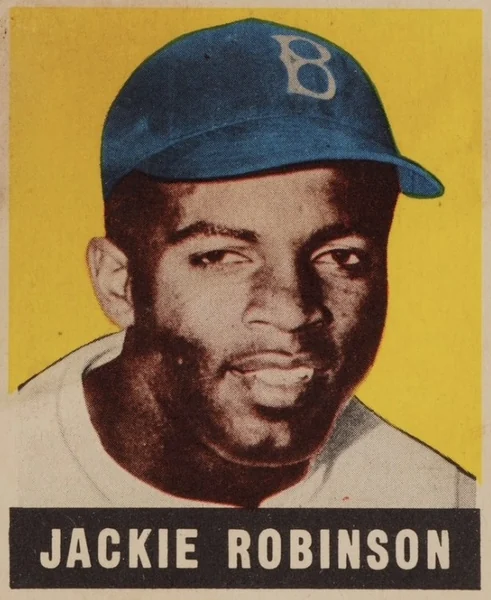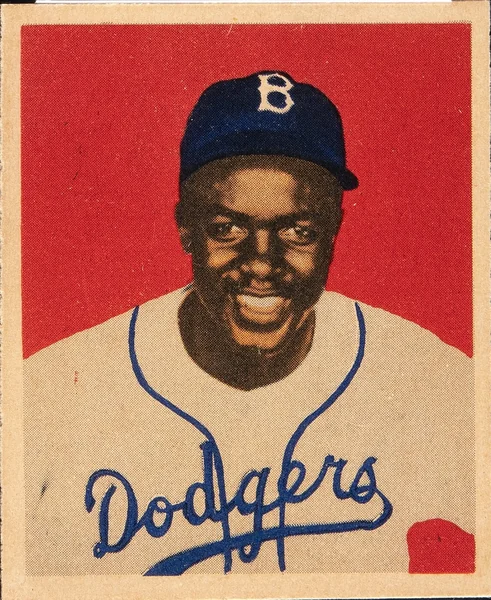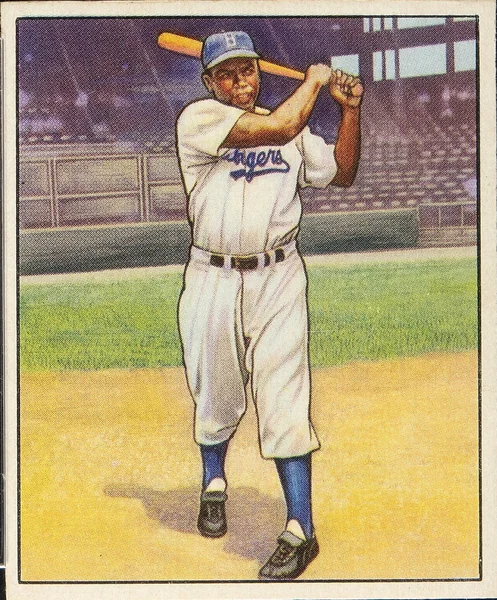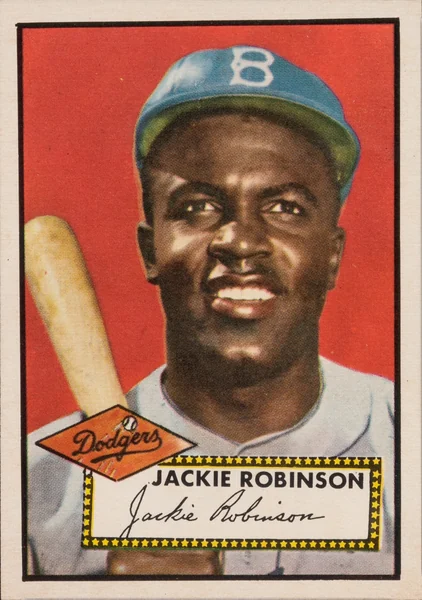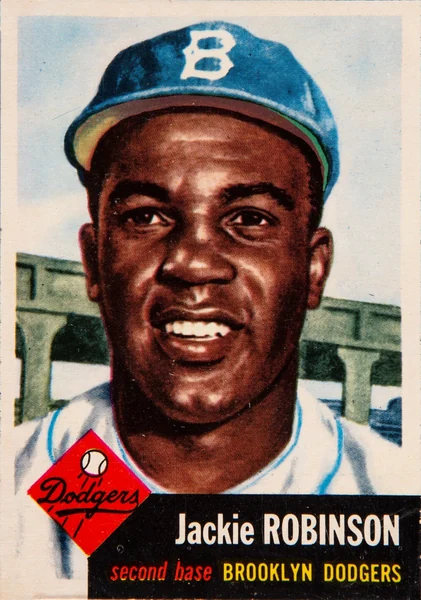
The last thing Jackie Robinson did on a major-league field was strike out. It was the ninth inning of the seventh game of the 1956 World Series, the Yankees ahead 9–0, and Yogi Berra dropped the third strike; Robinson ran for first and was thrown out to end it. The day before, in the tenth inning of Game 6, he had lined the single that won the game 1–0. That was his last hit.
In December the Dodgers traded him to the Giants for a left-handed pitcher named Dick Littlefield and cash. They did not know he had already decided to quit, or that he had given the story to Look magazine, which had paid for it and wanted it first. The article ran in January. He sent the league his retirement in writing, the trade was canceled, and he finished as a Brooklyn Dodger.
He finished as a Brooklyn Dodger, and there was no card the following spring.
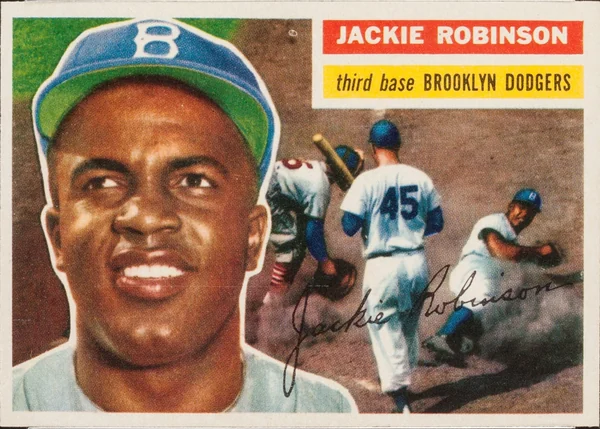
So this is the last one. Topps printed 340 cards in 1956, turned on their sides, each with a large color portrait and a smaller action scene beside it — the design it had begun the year before and made better. Robinson’s portrait is close and warm, in the cap with the B, and the scene to the right is a ballgame in progress: a play at a base, a runner in the dirt. The banner at the top lists him at third base, which is where he spent most of that last summer.
Card 30 falls in the part of the set that was printed on two kinds of stock, so it exists with a gray back and with a white back. The front is the same either way. Collectors who care about such things will want one of each, and most people will not notice.
A horizontal card wears along its long edges, and the 1956s have a white border that shows a soft corner without mercy. Centering wanders, as it does across the set. The color is usually strong. The trouble with a 1956 is almost never the picture. It is the border around it, and there was no next year in which to make another.